














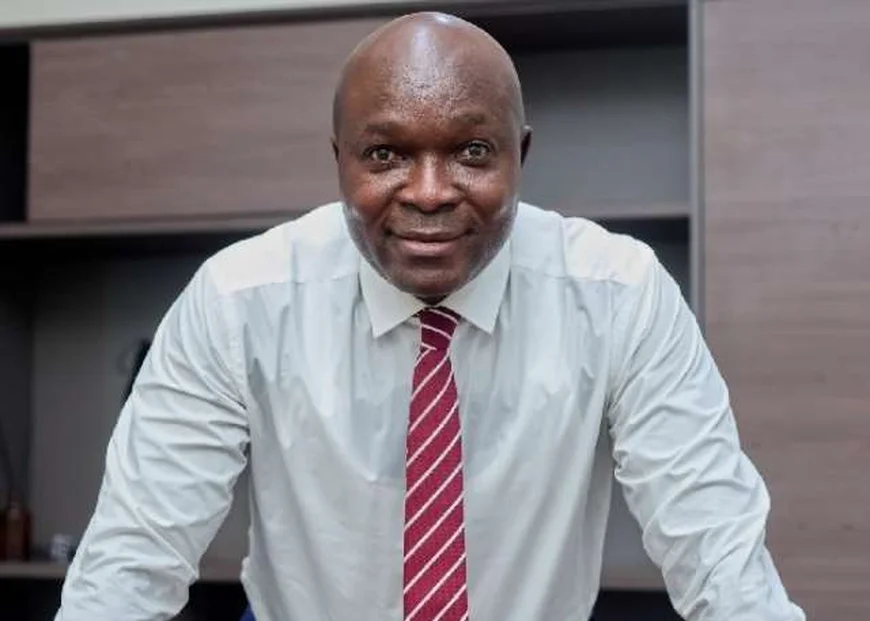





Sam George Urges Tech Students to Patent Innovations and Create Jobs


The Minister for Communication, Digital Technology and Innovations, Samuel Nartey George, has urged technology students and researchers in Ghana to patent their innovations and commercialise their work to create jobs and address pressing national challenges.
He said locally developed technologies should not remain confined to research institutions but must be transformed into practical solutions that can serve industries, public institutions and communities across Ghana and beyond.
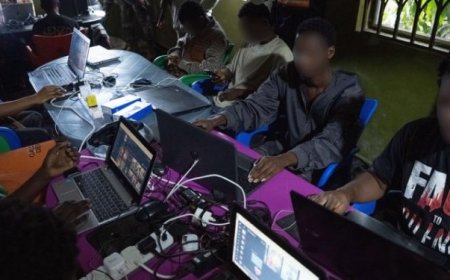
Sam George made the call during an interaction with students and researchers working on technology-driven projects at the Kwame Nkrumah Science and Technology (KNUST) in the Ashanti Region.
The engagement formed part of his working tour of the region, which included visits to One Million Coders Programme (OMCP) centres and telecommunications cell sites, following a courtesy call on the Ashanti Regional Minister, Dr Frank Amoakohene, at the Regional Coordinating Council.
During the interaction, the minister examined several projects being developed by the students and encouraged them to pursue innovations with commercial potential.
“Great work. Keep going. You see, these are some of the things that I was saying, that we need to begin to patent and then begin to push outside and create jobs,” he said.
Hon. Sam George explained that a single innovation could generate employment opportunities beyond its original developers if it were properly protected, commercialised and deployed across different institutions.
He cited the potential for some projects to create between 20 and 50 jobs through the provision of related services to multiple organisations.
The minister expressed interest in the range of projects presented to him, including research into water quality, the use of Wi-Fi signals for alternative applications, hearing aids, sign-language translation, healthcare technology, predictive maintenance and recommendation systems.
One of the students explained that their project was exploring the use of sensors and machine learning to identify potential equipment faults before machines break down.
The student said the predictive maintenance system was designed to help engineers detect abnormalities early and address problems before they disrupt operations.
Sam George welcomed the approach, noting that the technology could help move maintenance practices beyond reacting to faults after they occur.
Another project focused on developing a model capable of understanding sign language and translating it, an innovation that could improve communication for people with hearing and speech impairments.
The minister also interacted with a PhD student in computer engineering whose proposed research would apply artificial intelligence to healthcare, with particular attention to Parkinson's disease.
He encouraged the researcher to pursue the work, noting the potential value of developing technologies that could help improve the management of the condition.
The visit also provided an opportunity for the minister to engage Ama Branoa Banful, a PhD student at the Kwame Nkrumah University of Science and Technology (KNUST), who is researching the use of English-Twi code-switching in speech recognition systems.
Banful explained that her research seeks to address the difficulty existing AI models face when processing conversations in which speakers switch between English and indigenous Ghanaian languages.
She said her doctoral work would build on her master's research, with the aim of developing a speech-to-speech pipeline that can understand multilingual conversations.
According to her, such systems could make digital services more accessible, particularly to people in rural communities who may prefer speaking to reading or writing.
“If you want someone in the village to benefit from what we are doing, we have to start getting into speech systems instead of just speech-to-text systems,” she said.
In response, Mr George highlighted the availability of indigenous-language datasets that could support the research, including approximately 35,000 hours of Ghanaian language data referenced during the discussion.
He encouraged Banful to build on existing research and explore opportunities to develop AI technologies that could serve users across Ghana and other African countries.
The minister noted that innovations in indigenous-language technology could have applications beyond Ghana, particularly in countries where multilingual communication is common.
He also encouraged the students to consider the broader commercial and social value of their projects, rather than limiting their work to academic research.
Click the link Puretvonline.com | WhatsApp Channel to join the WhatsApp channel
Contact/WhatsApp: +233243201960 or manuelnkansah33@gmail.com