























88% Use AI, 83% Shop on Social Media, 51% Hit by Scams – Visa Study Reveals

A new report by Visa has laid bare the numbers behind Nigeria’s rapidly evolving digital commerce space, revealing both explosive growth in AI-driven shopping and alarming exposure to online fraud.
According to the 2026 Stay Secure study, 88% of Nigerian consumers now use artificial intelligence to assist with shopping, while an overwhelming 97% say AI-powered tools have made online purchasing faster and easier.
The data shows that more than half of consumers rely on AI to compare prices (54%), check reviews (56%), and discover gift ideas (53%), confirming the technology’s growing role in everyday consumer decisions.
Yet, despite this widespread adoption, trust in AI remains cautious. Only 34% of users are willing to allow AI agents to complete transactions on their behalf, highlighting a significant trust gap in automated commerce.
The report also reveals strong confidence in AI’s future role in security, with 89% of respondents believing it will be critical in protecting consumers from fraud. Currently, 76% say AI has already made scams easier to identify.
However, the risks remain substantial.
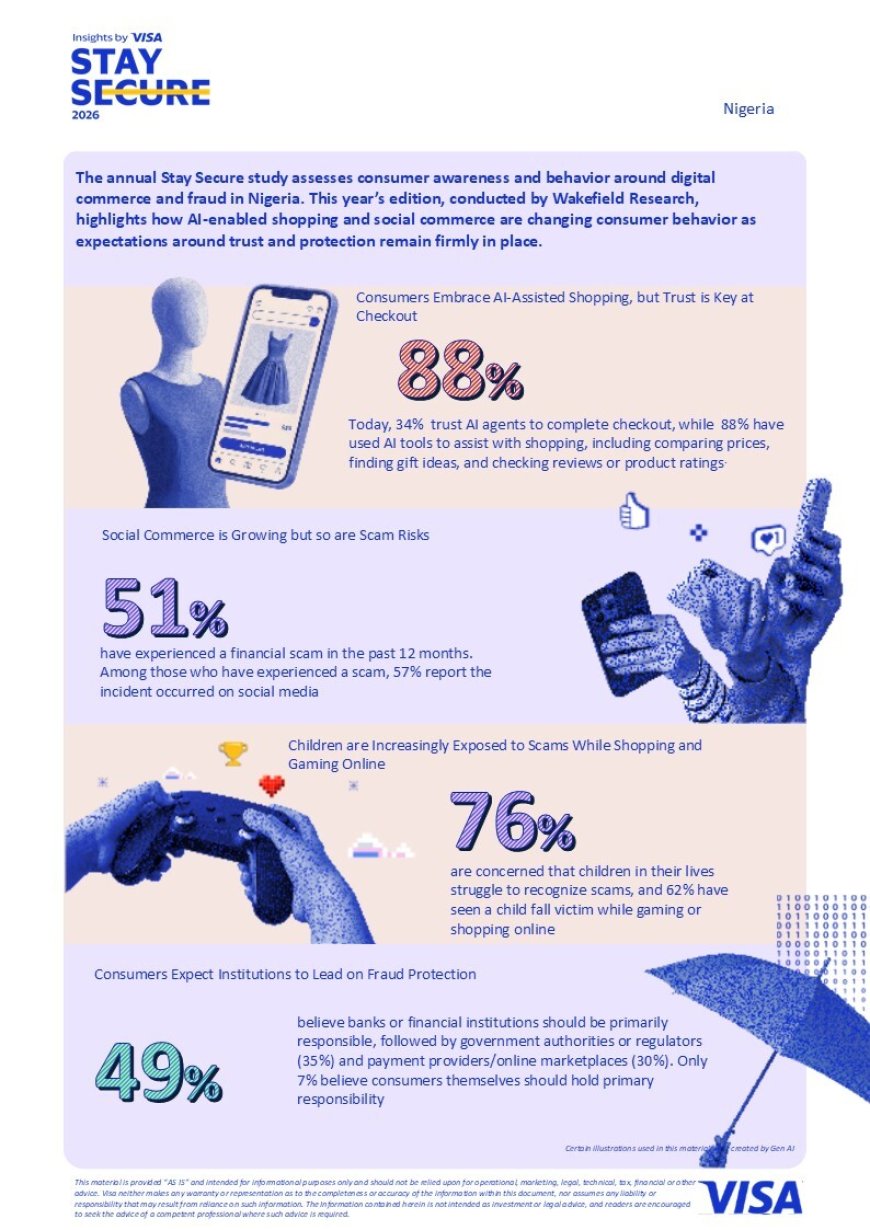
The study found that 83% of Nigerians have shopped via social media platforms, but this convenience comes at a cost. A troubling 51% of consumers reported experiencing a financial scam in the past year, with 57% of those incidents occurring on social media—making it the leading channel for fraud.
Concerns extend beyond adults to children, with 76% of respondents warning that young people struggle to recognise scams. Even more alarming, 62% say they have witnessed a child fall victim to fraud while gaming or shopping online. This comes as 33% of parents report their children have access to mobile payment apps or digital wallets.
The figures also point to shifting expectations around responsibility for online safety. Nearly half (49%) of consumers believe banks should take the lead in fraud protection, while 35% point to government regulators and 30% to payment providers. Only 7% believe individuals themselves should bear primary responsibility.
Consumers are also demanding more proactive protection, with 64% saying real-time alerts for suspicious activity would significantly boost their confidence in online payments.
Commenting on the findings, Irene Auma of Visa noted that while digital commerce continues to expand rapidly, trust and security remain non-negotiable.
The study ultimately paints a clear picture: Nigeria’s digital economy is booming, driven by AI and social commerce, but the scale of adoption is being matched by equally significant concerns about fraud, trust, and consumer protection.
Click the link Puretvonline.com | WhatsApp Channel to join the WhatsApp channel
GOT A STORY?
Contact/WhatsApp: +233243201960 or manuelnkansah33@gmail.com