






















BoG Imposes Three-Year Cheque Ban On Repeat Dud Cheque Offenders

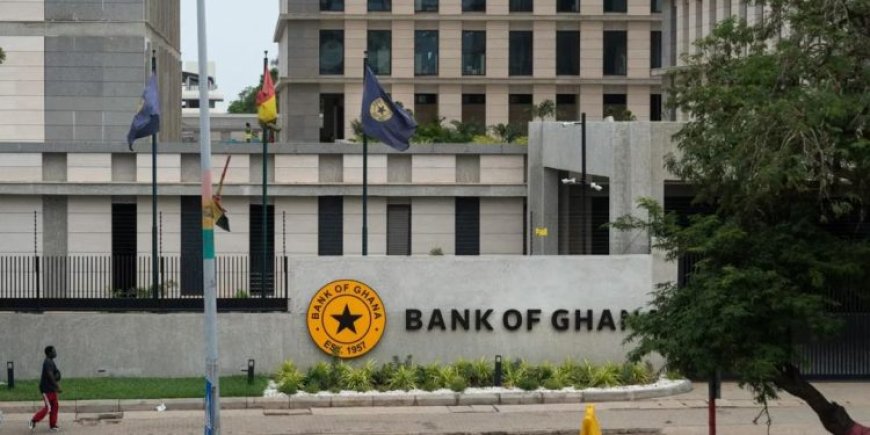
The Bank of Ghana (BoG) has introduced tougher sanctions against customers who issue dud cheques, including a three-year ban on issuing cheques and a one-year restriction on accessing new credit facilities, to strengthen confidence in the country’s payment system.
The measures, contained in a notice issued on June 24, 2026, replace earlier directives introduced in 2021 and 2025 and take immediate effect.
The central bank said the move follows continued concerns over the high incidence of dud cheque issuance despite previous regulatory interventions.
According to the Bank of Ghana, the persistent issuance of dishonoured cheques is undermining trust in cheque-based transactions and threatening the integrity of the financial system.
“The Bank of Ghana has observed with grave concern the high issuance of dud cheques by some customers of banks and specialised deposit-taking institutions," the notice stated.
Under the revised framework, customers who issue a dud cheque for the first time will be required to pay a penalty equivalent to 10 per cent of the cheque’s face value.
The offending customer will also receive a formal warning and be placed under surveillance by the bank or Specialised Deposit-Taking Institution (SDI) for at least one year.
The offence will be reported to both the credit reference bureaus and the Bank of Ghana.
A second offence committed within one year of the first will attract a higher penalty of 15 per cent of the cheque value, together with another formal warning and reporting requirements.
Customers who issue a third dud cheque within the same one-year period will face the most severe sanctions.
In addition to paying a penalty of 20% of the cheque value, they will be prohibited from issuing cheques in Ghana for a minimum period of three years.
“The Bank of Ghana shall ban such a customer from issuing cheques within the country for a minimum period of three years. The customer may, however, be permitted to receive cheques and funds into the affected account and perform other electronic transactions on the account.”
“In addition, the Bank of Ghana shall ban such a customer from accessing new credit facilities from the banking system for one year. The Bank of Ghana shall notify all banks and SDIs of the ban," the statement added.
Beyond the cheque ban, the Bank of Ghana will also prohibit third-time offenders from accessing new credit facilities from the banking system for one year.
The sanctions are designed to reinforce financial discipline and deter the misuse of cheque instruments.
While affected customers may continue to receive deposits, cheques and electronic transfers into their accounts, they will not be permitted to issue cheques during the sanction period.
The central bank said it will formally notify all banks and SDIs of customers subjected to the ban.
Upon receiving notification, financial institutions will be required to inform affected customers within five working days, recall all unused cheque books and refrain from issuing new cheque books until the sanctions are lifted.
The Bank of Ghana has also signalled plans to tighten oversight of persistent offenders through the creation of a Directory of High-Risk Cheque Issuers.
Customers who fail to return unused cheque books within ten working days after notification could face additional sanctions, including a possible ban from operating any current account.
Such individuals may also be listed in the new high-risk directory, which will serve as a reference database for the central bank and financial institutions when assessing customer risk profiles.
In addition, the Bank of Ghana reserves the right to publish the names of customers who commit a third dud cheque offence.
The directive places additional compliance obligations on banks and SDIs.
Financial institutions are required to continue submitting information on customers who issue dud cheques to credit reference bureaus in accordance with the Credit Reporting Act, 2007 (Act 726).
They must also submit monthly returns on dud cheque incidents to the Bank of Ghana by the 10th day of the following month, including “nil returns” where no cases are recorded.
Failure to submit accurate and complete reports could attract regulatory sanctions under the Banks and Specialised Deposit-Taking Institutions Act, 2016 (Act 930).
Banks and SDIs have further been directed to prominently display the new notice in banking halls and on their official websites.
The latest directive represents one of the strongest enforcement actions taken by the Bank of Ghana against cheque-related offences in recent years.
They could improve payment discipline, strengthen credit reporting frameworks and restore confidence in cheque transactions, which remain an important payment instrument for businesses despite the growing adoption of digital payment channels.
Click the link Puretvonline.com | WhatsApp Channel to join the WhatsApp channel
GOT A STORY?
Contact/WhatsApp: +233243201960 or manuelnkansah33@gmail.com