

Women’s Development Bank Will Transform Women from Vulnerability to Viability — Gender Minister

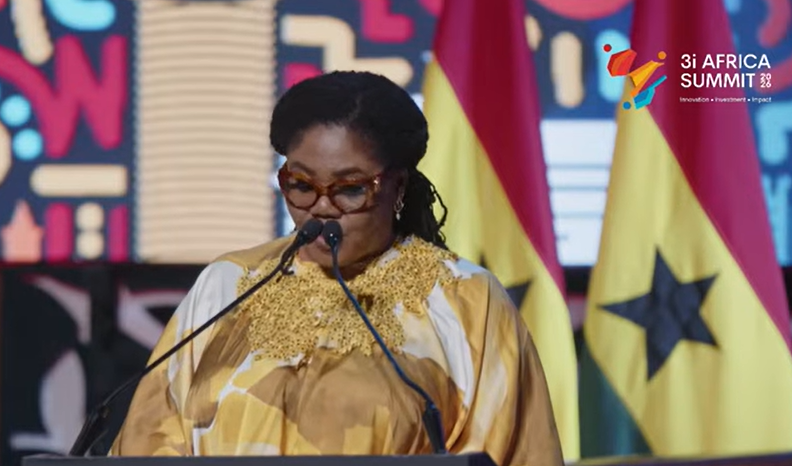
Ghana’s Minister for Gender, Children and Social Protection, Hon. Dr. Agnes Naa Momo Lartey has announced that the upcoming Women’s Development Bank will be a “strategic intervention” to close persistent financing gaps for women, enabling them to move from vulnerability to viable economic participation in Africa’s digital economy.
Speaking at the 3i Africa Summit 2026 in Accra, the minister said Africa’s digital and financial transformation must be anchored in inclusion, stressing that women remain central to economic growth across the continent.
Dr. Naa Momo Lartey noted that women dominate informal trade, agriculture, and small and medium enterprises, serving as traders, market women, agro-processors, artisans and increasingly digital entrepreneurs.
According to her, evidence consistently shows that women are not only economic actors but also drivers of resilience, innovation and community stability, with their economic empowerment producing wider benefits for households and national development.
However, she stressed that while digital technologies such as mobile money, e-commerce platforms and digital credit services are expanding financial access, structural barriers continue to limit women’s full participation.
It is against this backdrop that she highlighted the planned Women’s Development Bank as a key policy intervention designed to directly address financing constraints faced by women-owned businesses.
Describing the initiative as “timely and strategic”, the minister said the bank will offer tailored financial products, business development support, and leverage fintech solutions to expand access to credit for women.
“The Women’s Development Bank will provide an avenue for women to move from vulnerability to viability,” she stated.
She explained that the institution will particularly benefit women-owned micro and small enterprises by reducing reliance on traditional collateral requirements and expanding access to microcredit and digital financial services.
For many women, she said, this will mean the ability to grow small businesses, access affordable financing, and participate more fully in digital marketplaces beyond their immediate communities.
The minister further noted that the initiative aligns with broader national efforts under the leadership of John Dramani Mahama to mainstream gender inclusion into development policy.
She referenced key frameworks such as the National Gender Policy and the Affirmative Action Act, which she said provide a strong foundation for promoting women’s participation in leadership, governance and economic decision-making.
She also highlighted the role of social protection programmes such as the Livelihood Empowerment Against Poverty (LEAP), noting that many beneficiary households, often female-headed, are now transitioning towards economic independence.
According to her, the integration of financial technology, including mobile money, digital savings and interoperable payment systems, will be critical in supporting this transition.
Reiterating its significance, she said the bank is not merely a financial entity but a development tool aimed at reshaping women’s economic participation.
The minister urged stakeholders to prioritise expanding digital infrastructure, strengthening partnerships across sectors, and promoting women’s leadership in shaping Africa’s economic future.
She commended institutions such as the Bank of Ghana and Ghana Interbank Payment and Settlement Systems for their role in convening platforms that promote innovation and financial inclusion.
Concluding her remarks, she stressed that empowering women financially is central to Africa’s broader growth agenda.
“When women thrive, Africa thrives,” she said, underscoring the transformative potential of the Women’s Development Bank in building a more inclusive economic future.
Ghana’s Minister for Gender, Children and Social Protection has announced that the upcoming Women’s Development Bank will be a “strategic intervention” to close persistent financing gaps for women, enabling them to move from vulnerability to viable economic participation in Africa’s digital economy.
Speaking at the 3i Africa Summit 2026 in Accra, the minister said Africa’s digital and financial transformation must be anchored in inclusion, stressing that women remain central to economic growth across the continent.
She noted that women dominate informal trade, agriculture, and small and medium enterprises, serving as traders, market women, agro-processors, artisans and increasingly digital entrepreneurs.
According to her, evidence consistently shows that women are not only economic actors but also drivers of resilience, innovation and community stability, with their economic empowerment producing wider benefits for households and national development.
However, she stressed that while digital technologies such as mobile money, e-commerce platforms and digital credit services are expanding financial access, structural barriers continue to limit women’s full participation.
It is against this backdrop that she highlighted the planned Women’s Development Bank as a key policy intervention designed to directly address financing constraints faced by women-owned businesses.
Describing the initiative as “timely and strategic”, the minister said the bank will offer tailored financial products, business development support, and leverage fintech solutions to expand access to credit for women.
“The Women’s Development Bank will provide an avenue for women to move from vulnerability to viability,” she stated.
She explained that the institution will particularly benefit women-owned micro and small enterprises by reducing reliance on traditional collateral requirements and expanding access to microcredit and digital financial services.
For many women, she said, this will mean the ability to grow small businesses, access affordable financing, and participate more fully in digital marketplaces beyond their immediate communities.
The minister further noted that the initiative aligns with broader national efforts under the leadership of John Dramani Mahama to mainstream gender inclusion into development policy.
She referenced key frameworks such as the National Gender Policy and the Affirmative Action Act, which she said provide a strong foundation for promoting women’s participation in leadership, governance and economic decision-making.
She also highlighted the role of social protection programmes such as the Livelihood Empowerment Against Poverty (LEAP), noting that many beneficiary households, often female-headed, are now transitioning towards economic independence.
According to her, the integration of financial technology, including mobile money, digital savings and interoperable payment systems, will be critical in supporting this transition.
Reiterating its significance, she said the bank is not merely a financial entity but a development tool aimed at reshaping women’s economic participation.
The minister urged stakeholders to prioritise expanding digital infrastructure, strengthening partnerships across sectors, and promoting women’s leadership in shaping Africa’s economic future.
She commended institutions such as the Bank of Ghana and Ghana Interbank Payment and Settlement Systems for their role in convening platforms that promote innovation and financial inclusion.
Concluding her remarks, she stressed that empowering women financially is central to Africa’s broader growth agenda.
“When women thrive, Africa thrives,” she said, underscoring the transformative potential of the Women’s Development Bank in building a more inclusive economic future.
Click the link Puretvonline.com | WhatsApp Channel to join the WhatsApp channel
GOT A STORY?
Contact/WhatsApp: +233243201960 or manuelnkansah33@gmail.com
