

AI Will Not Replace Jobs; It Will Redefine Them – MTN Ghana Chief Information Officer

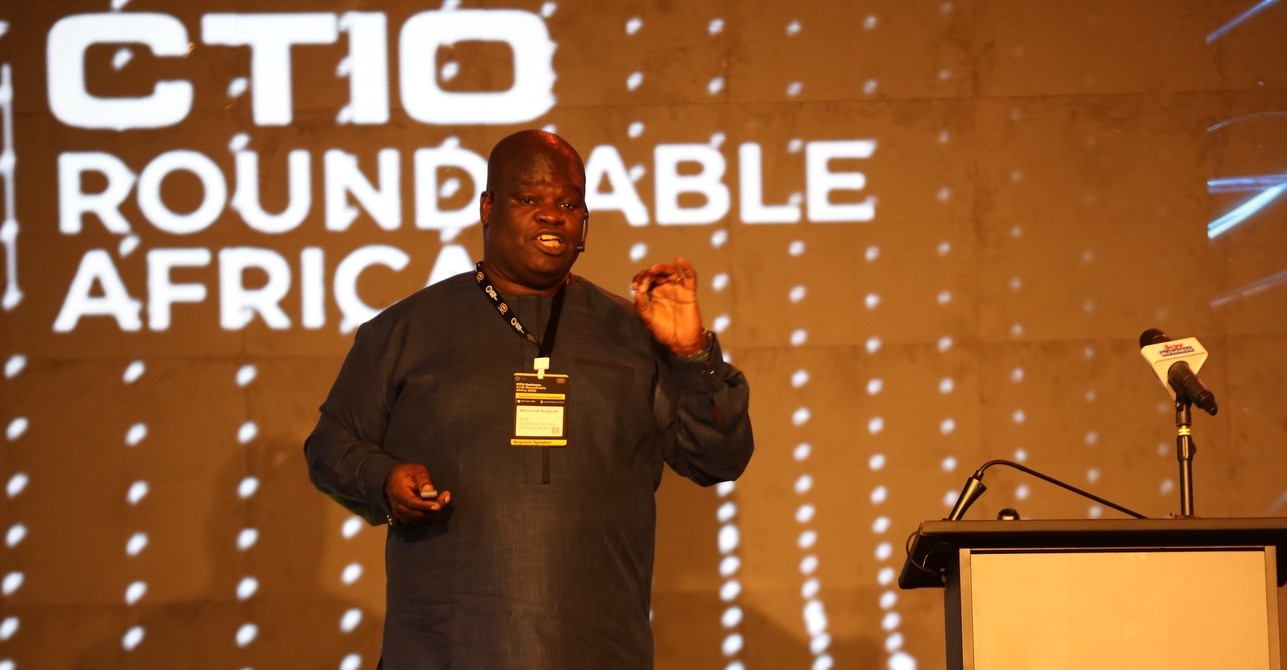
The Chief Information Officer of MTN Ghana, Bernard Acquah, has delivered a strong message on the future of work under artificial intelligence, insisting that AI will not replace humans but rather enhance their capabilities and redefine jobs.
Speaking to technology leaders and industry experts at the 4th Annual CTIO Roundtable Africa 2026, held at the Labadi Beach Hotel, Mr Acquah framed AI as a “horizontal technology” that cuts across all sectors of the economy, much like electricity, the internet, and steam power transforming every aspect of business, governance, and daily life.
“Jobs, jobs, jobs,” he emphasised repeatedly, drawing attention to the widespread concern about employment in the AI era. However, he quickly reassured the audience that AI should be seen as a tool for augmentation rather than displacement.
Referencing a view shared during the discussion that “AI will not replace you or enhance you,” he stressed that the true reality is enhancement. “AI is supposed to enhance you, not replace you. It is about guiding you to do a better job,” he said.
Mr Acquah explained that the nature of work is shifting from execution to supervision and direction, where professionals define outcomes while AI tools help execute tasks more efficiently.
He cited global projections from the World Economic Forum indicating that while approximately 92 million jobs may be displaced by 2030, about 170 million new roles could be created, resulting in a net job gain driven by AI-enabled industries.
According to him, routine and repetitive tasks are most at risk of automation, while roles requiring judgement, creativity, oversight, and strategy will grow in importance.
He also warned that businesses must focus on three key outcomes when investing in AI: productivity gains, cost efficiency, and revenue growth. “No CFO invests in technology without asking how it drives revenue,” he noted, urging technology leaders to align AI strategies with business growth.
Highlighting emerging trends, Mr Acquah pointed to the rise of “agentic AI”, describing it as a shift from simple tools like search engines to autonomous systems capable of performing complex tasks with minimal human input.
However, he cautioned that AI adoption comes with serious challenges, particularly around cybersecurity, data privacy, governance, and workforce reskilling. He stressed that organisations must balance innovation with risk management as AI systems become more powerful.
He further emphasised that human accountability remains central despite automation. “We are still accountable as leaders for what the tool does. AI is a tool; you cannot blame it if you didn’t guide it properly,” he said.
Calling for organisational transformation, he urged companies to rethink operating models and invest heavily in skills development to prepare workers for AI-driven environments. He warned against blind reliance on AI outputs, noting that domain expertise remains essential to detect errors and “hallucinations” in AI-generated results.
Concluding his remarks, Mr Acquah underscored disciplined experimentation and responsible adoption of AI technologies, stressing that innovation must be pursued with awareness of risks.
Ultimately, he maintained that the future of work will be defined not by job loss but by job evolution, where humans and AI collaborate to drive productivity, innovation, and economic growth.
Click the link Puretvonline.com | WhatsApp Channel to join the WhatsApp channel
GOT A STORY?
Contact/WhatsApp: +233243201960 or manuelnkansah33@gmail.com
