

Ghana’s Digital System Transformation Hinges on Integration, Not Fragmentation – IFC Director

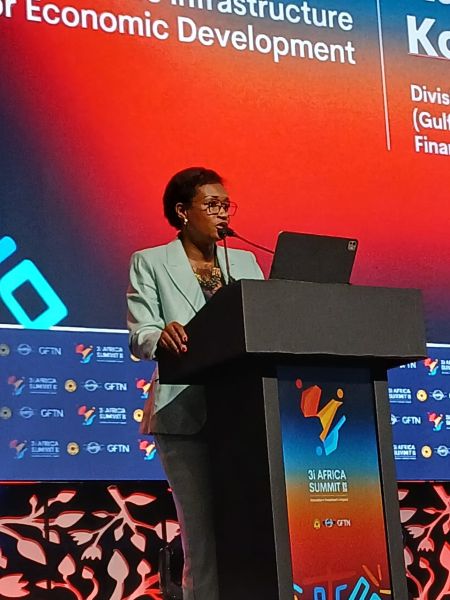
The Divisional Director for West Africa (Gulf of Guinea) at the International Finance Corporation (IFC), Nathalie Kouassi-Akon, has stated that Ghana’s digital system transformation risks stalling unless fragmented platforms are fully integrated into a seamless ecosystem, cautioning that interoperability, not innovation alone, will determine whether the country’s digital finance success translates into broad-based economic growth.
At the 3i Africa Summit 2026 in Accra, the Divisional Director for West Africa (Gulf of Guinea) at the International Finance Corporation laid out three key reflections: the urgency of integration, the conditions for success, and the critical role of public-private partnerships in scaling Africa’s digital economy.
She argued that while digital ecosystems across Africa, including Ghana, have expanded rapidly, they remain deeply fragmented. Payment systems often do not communicate with each other, data cannot move securely across platforms, and small businesses struggle to scale beyond local markets despite being digitally active.
“Without integration, Africa risks scaling silos rather than scaling growth,” she warned, noting that the continent could end up with innovation that fails to deliver productivity or meaningful economic expansion.
According to her, the solution lies in building strong digital public infrastructure anchored on interoperable payments, shared digital identity systems, trusted data exchange frameworks, and reliable connectivity. These, she described as the “invisible rails” necessary to unlock cross-border trade, strengthen regional value chains, and operationalise the ambitions of the African Continental Free Trade Area.
She emphasised that when such systems are connected, small and medium-sized enterprises (SMEs) become more visible and bankable, enabling faster credit decisions, formalisation of informal businesses, and job creation at scale.
However, Nathalie Kouassi-Akon was clear that digital transformation cannot succeed in isolation. She pointed to persistent structural constraints across Africa, including infrastructure deficits, unreliable electricity, limited digital skills, and regulatory fragmentation. These challenges, she said, must be addressed alongside digital investments.
“Digital public infrastructure cannot succeed if these systemic constraints remain unaddressed,” she stressed, adding that trust is equally critical. Strong governance, cybersecurity, and data protection frameworks are essential to drive adoption by citizens and attract investor confidence.
On financing, she underscored that governments alone cannot deliver digital infrastructure at the speed and scale required. Instead, she advocated for a robust public-private partnership model where governments provide enabling policies, development finance institutions de-risk investments, and the private sector brings capital, innovation, and operational expertise.
Institutions like the IFC, she noted, play a catalytic role by mobilising private capital into critical infrastructure. Over the past decade, the IFC has invested $9.6 billion in digital infrastructure globally, including a $100 million investment in Raxio Group to expand carrier-neutral data centres across multiple African countries—projects that support cloud services, AI, and digital finance while creating jobs.
She explained that such partnership models are not about privatising public assets but about leveraging private-sector capabilities to deliver public value efficiently and sustainably.
Turning to Ghana, Nathalie Kouassi-Akon praised the country’s leadership in digital innovation, citing its mobile money success and growing tech ecosystem. However, she stressed that the next phase of transformation depends on connecting Ghana’s systems seamlessly with regional markets.
She painted a vision where a young entrepreneur in Kumasi can use a digital identity to access credit, trade across borders, and build scalable businesses, highlighting that every interoperable system built translates directly into jobs and economic opportunity.
“The question is not whether Africa’s digital economy will grow; it will,” she concluded. “The real question is who builds it, who owns it, and who benefits. If we get integration right, the answer can be our people and our continent.”
Click the link Puretvonline.com | WhatsApp Channel to join the WhatsApp channel
GOT A STORY?
Contact/WhatsApp: +233243201960 or manuelnkansah33@gmail.com
