























Agribusiness Chamber Demands Urgent Tomato Emergency Plan
The Chamber of Agribusiness Ghana (CAG) has called for the immediate implementation of a National Tomato Emergency Strategy following Burkina Faso’s decision to ban the export of fresh tomatoes. In a statement issued on March 20, 2026, the Chamber described the ban as a major structural shock to Ghana’s food supply system, noting that the […]

The Chamber of Agribusiness Ghana (CAG) has called for the immediate implementation of a National Tomato Emergency Strategy following Burkina Faso’s decision to ban the export of fresh tomatoes.
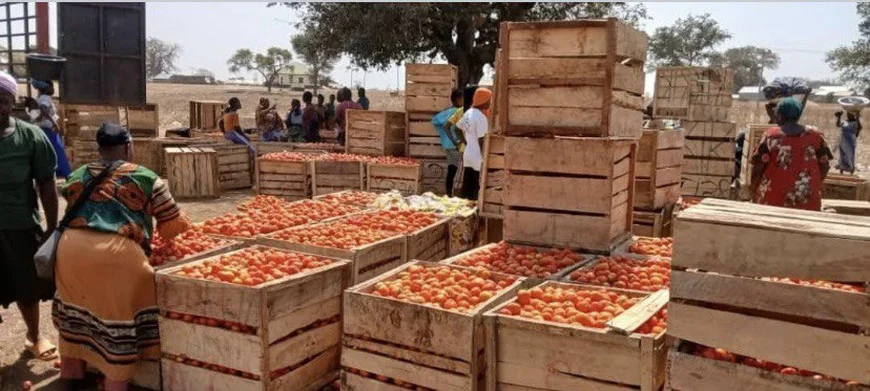
In a statement issued on March 20, 2026, the Chamber described the ban as a major structural shock to Ghana’s food supply system, noting that the country relies on Burkina Faso for up to 90 per cent of its dry-season tomato supply.
According to the Chamber, the export ban cannot be resolved through diplomacy and must instead be addressed through urgent domestic interventions involving government, the private sector, and key stakeholders in the agricultural value chain.
The group warned that the decision has already triggered rising tomato prices, supply shortages, and income losses for traders, while increasing Ghana’s dependence on imported tomato paste from China and the European Union.
CAG further indicated that Ghana faces an annual tomato demand of about 800,000 metric tonnes but currently produces only 510,000 metric tonnes, leaving a supply gap of 290,000 metric tonnes.
The Chamber also highlighted that between 20 and 50 per cent of locally produced tomatoes are lost due to poor post-harvest handling, a situation it said could be addressed through improved storage and logistics.
To address the crisis, CAG is proposing a 12-month strategy aimed at achieving year-round tomato self-sufficiency by March 2027.
The plan, to be implemented through a Public-Private Partnership model and the Grow Ghana Agro-Corporate Partnership Framework, focuses on five key areas: expanding irrigation, reducing post-harvest losses, reviving processing plants, supporting farmers with inputs and financing, and aligning trade policies to protect local production.
Under the irrigation component, the chamber is proposing the rehabilitation of existing schemes such as Tono, Vea, and Pwalugu, alongside the deployment of solar-powered drip irrigation systems to boost dry-season production.
It also called for the establishment of aggregation and cooling centres across major production zones to reduce postharvest losses and ensure more produce reaches the market.
The Chamber further recommended the rehabilitation of dormant tomato processing factories in Pwalugu, Wenchi, and Techiman to convert surplus production into processed products for year-round consumption.
In addition, it urged the government to provide farmers with certified seeds, fertilisers, and access to credit, while encouraging private sector participation in financing and supply chain management.
On trade policy, the Chamber called for the enforcement of tariffs on imported tomato paste and the initiation of anti-dumping measures to protect local processors.
CAG outlined a 12-month implementation roadmap, beginning with a presidential declaration and budget allocation, followed by infrastructure rehabilitation, farmer mobilisation, and scaling up production to meet national demand.
The Chamber also proposed immediate government actions, including the allocation of at least GH¢430 million to support the strategy, the launch of the partnership framework to attract investors, and engagement with development partners such as the African Development Bank and the World Bank.
The chief executive officer of the Chamber, Anthony Kofituo Morrison, said the export ban should be seen as an opportunity for Ghana to build a resilient and self-sufficient tomato industry.
He stressed that the country has the resources needed to achieve food security but must act decisively and collaboratively to close the supply gap and reduce its dependence on imports.
Click the link Puretvonline.com | WhatsApp Channel to join the WhatsApp channel
GOT A STORY?
Contact/WhatsApp: +233243201960 or manuelnkansah33@gmail.com