



















GRA Fires Back: New VAT Will Cut Prices; Traders Misunderstanding System, Authority Says
The Ghana Revenue Authority (GRA) has responded to concerns raised by the Abossey Okai Spare Parts Traders Association over the new Value Added Tax (VAT) regime, insisting that the policy will not increase consumer prices or distort market competition when properly applied. In a press release, the Authority said statements by the traders suggesting the […]

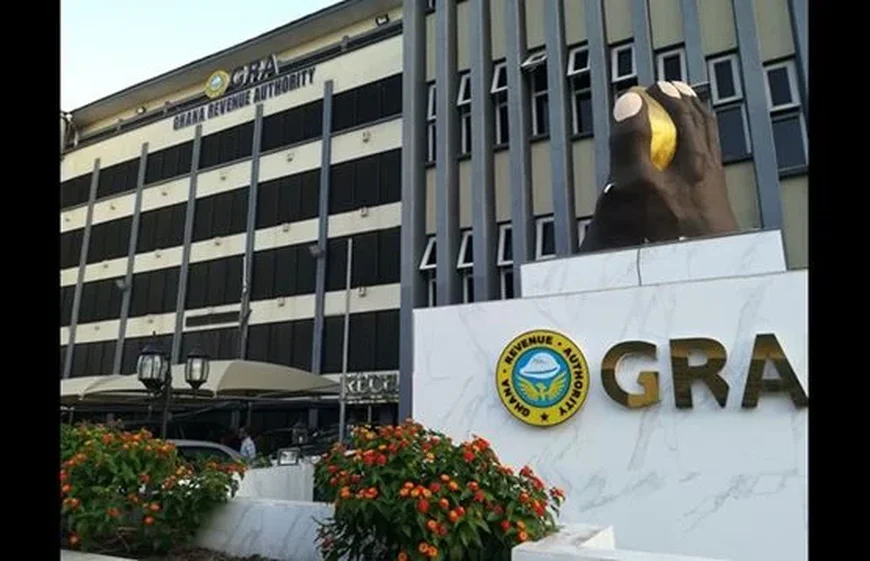
The Ghana Revenue Authority (GRA) has responded to concerns raised by the Abossey Okai Spare Parts Traders Association over the new Value Added Tax (VAT) regime, insisting that the policy will not increase consumer prices or distort market competition when properly applied.
In a press release, the Authority said statements by the traders suggesting the VAT changes would impose an unfair burden reflect a “fundamental misunderstanding” of how the new system operates.
According to the GRA, the transition from the 4 per cent flat rate to the standard 20 per cent VAT does not necessarily translate into higher prices because input VAT paid by traders is now fully deductible. Under the previous system, traders paid input VAT of 21.9 per cent on purchases but could not reclaim it, making it part of their cost. Under the new regime, traders can claim back the 20 per cent input VAT, lowering their effective cost base.
Using a GH¢500 base price example with a 20 per cent profit margin, the Authority explained that the trader’s actual cost under the old system rose to GH¢609.50 due to non-deductible input VAT, while under the new system the cost remains GH¢500 because the input VAT is reclaimable. As a result, the final price to consumers under the new regime would be GH¢720 compared to GH¢760.66 under the old one, making the new system cheaper by GH¢40.66.
The GRA said any observed price increases are likely due to traders applying the 20 per cent output VAT while still treating input VAT as part of their cost, which amounts to a transitional pricing error rather than a flaw in the policy.
The Authority also dismissed concerns that the higher VAT registration threshold could distort competition. It explained that non-registered traders still pay VAT on purchases but cannot claim it back, meaning the tax becomes embedded in their costs. Registered traders, however, recover input VAT and operate on a lower cost base. Despite the difference in tax treatment, the GRA said both registered and non-registered traders can end up selling goods at similar final prices when profit margins are applied.
The increase in the VAT registration threshold to GH¢750,000, the Authority said, is intended to relieve smaller businesses from administrative burdens rather than create unfair competition.
Highlighting the broader benefits of the reform, the GRA said the new VAT system reduces the effective tax rate from 21.9 per cent to 20 per cent, eliminates the COVID-19 Health Recovery Levy, allows full input VAT deductibility, removes cascading “tax-on-tax” effects, and lowers the cost of doing business. It also introduces a simplified and unified VAT structure and makes input VAT recovery part of the existing self-reporting process.
The Authority noted that traders now operate with a significantly lower cost base – nearly an 18 per cent reduction in the example provided – and that the reforms are designed to improve transparency, compliance, and efficiency.
To support businesses during the transition, the GRA said it has established a joint technical team with the Ghana Union of Traders’ Associations (GUTA) to provide guidance on VAT record-keeping, input tax claims, and pricing. The Authority indicated it is ready to extend similar support to the Abossey Okai Spare Parts Traders Association and other trade groups.
The GRA urged stakeholders to engage constructively and take full advantage of the benefits of the reform, reiterating that the new VAT regime does not inherently raise prices or distort competition when properly implemented.
Click the link Puretvonline.com | WhatsApp Channel to join the WhatsApp channel
GOT A STORY?
Contact/WhatsApp: +233243201960 or manuelnkansah33@gmail.com