

















GoldBod Saga: Gold Trading Benefits Go Beyond Profit And Loss – GNASSM
The Ghana National Association of Small Scale Miners (GNASSM) has called on both the majority and minority in parliament to safeguard the progress made in the artisanal and small-scale mining (ASM) gold sector, warning against interference driven by short-term political interests or external pressures. In a statement issued on Wednesday, January 1, 2026, and signed […]


The Ghana National Association of Small Scale Miners (GNASSM) has called on both the majority and minority in parliament to safeguard the progress made in the artisanal and small-scale mining (ASM) gold sector, warning against interference driven by short-term political interests or external pressures.
In a statement issued on Wednesday, January 1, 2026, and signed by General Secretary Godwin N. Amarh, GNASSM emphasised that ASM gold trading should not be evaluated solely on annual profit and loss figures but considered for its broader economic, social, and governance benefits.
The Association highlighted that under the previous administration, 63.6 metric tonnes of ASM gold were exported in 2024 during the Gold-for-Oil and Gold-for-Reserves programmes, a period when the Bank of Ghana recorded losses. Under the current Mahama administration, GNASSM noted that 101 metric tonnes of ASM gold had been exported as of December 23, 2025, with the Bank of Ghana again posting losses.
“These figures show clearly that ASM gold trading cannot be assessed solely on a narrow accounting basis of profit and loss in a single year. Its broader macroeconomic, social, and governance benefits must be taken into account,” the Association said.
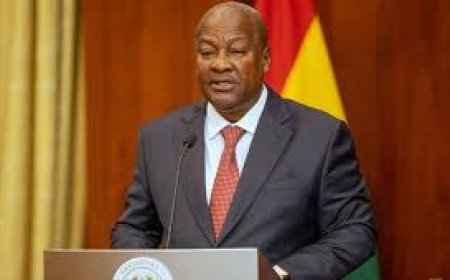
GNASSM commended the Mahama government for establishing the Ghana Gold Board (Goldbod), which it said has implemented a credible and structured gold acquisition channel. According to the Association, Goldbod’s initiatives have strengthened the sector by formally recognising the contribution of ASM gold to the economy, ensuring that foreign buyers are excluded from direct trading, providing continuous collaboration with small-scale miners in policy and programme design, and offering targeted support for capacity building in sustainable mining, traceability, and environmental stewardship.
The Association further praised Goldbod for implementing transparent and competitive pricing mechanisms, which prevent miners from suffering losses due to arbitrary valuations, while its liquidity structure ensures that all legitimately mined gold can be purchased, reducing smuggling and the associated risks of money laundering and terrorism financing. GNASSM argued that these measures have allowed Ghanaians to control the ASM gold market, enabling the accumulation of domestic capital and paving the way for the growth of small-scale mines into larger operations that can strengthen the national economy and improve social conditions.
GNASSM cautioned politicians to allow miners and legitimate gold traders to operate within the existing orderly and transparent framework. The Association stressed that parliamentarians are aware of the object and mandate of the Goldbod and the non-partisan approach used in passing the Ghana Gold Board Act, urging both sides of Parliament to maintain a united front that supports the sector rather than disrupts it for political gain.
“The small-scale miners are not happy at all about what is happening and its adverse effect on the market since our players are being derailed instead of being allowed to focus and execute their work for Mother Ghana,” GNASSM said, stressing that political interference could undermine Ghana’s foreign exchange, reserves, and economic development.
Meanwhile, the minority in Parliament has called for a bipartisan investigation into the reported $214 million loss by the Bank of Ghana under the Gold-for-Reserves programme.
“We are demanding the following: a bipartisan parliamentary inquiry into the circumstances under which the Republic of Ghana has lost $214 million heading to $300 million to be done here by the parliament of Ghana. We are asking for a parliamentary ad hoc investigative committee with the power to subpoena all contracts, licences, and intermediaries, including this power rock monopoly.
The call by the Minority comes after the International Monetary Fund (IMF) raised concerns over the reported losses, describing them as a potential risk to Ghana’s macroeconomic stability. The IMF attributed the losses to transactions involving artisanal and small-scale mining of doré gold and referenced alleged “GoldBod off-taker fees”.
In its 5th review of Ghana’s ongoing IMF programme, the Fund disclosed that losses from the artisanal and small-scale doré gold transactions under the programme had reached $214 million by the end of September 2025.
“In 2025 through the end of Q3, losses from the artisanal and small-scale doré gold transactions component of G4R have reached US$214 million (0.2 per cent of GDP), mostly on trading losses but also on GoldBod off takers’ fees.”
Click the link Puretvonline.com | WhatsApp Channel to join the WhatsApp channel
GOT A STORY?
Contact/WhatsApp: +233243201960 or manuelnkansah33@gmail.com