





Ghana Has Politicians, But No Leaders
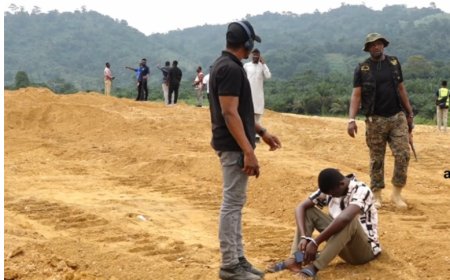
The inability of successive administrations to protect Ghana’s rivers, forests, and land from destruction reveals a hard truth we must confront honestly. This is not the failure of one government or another, but the failure of leadership itself. When different parties govern yet the same crises deepen, it becomes clear that Ghana is trapped in […]

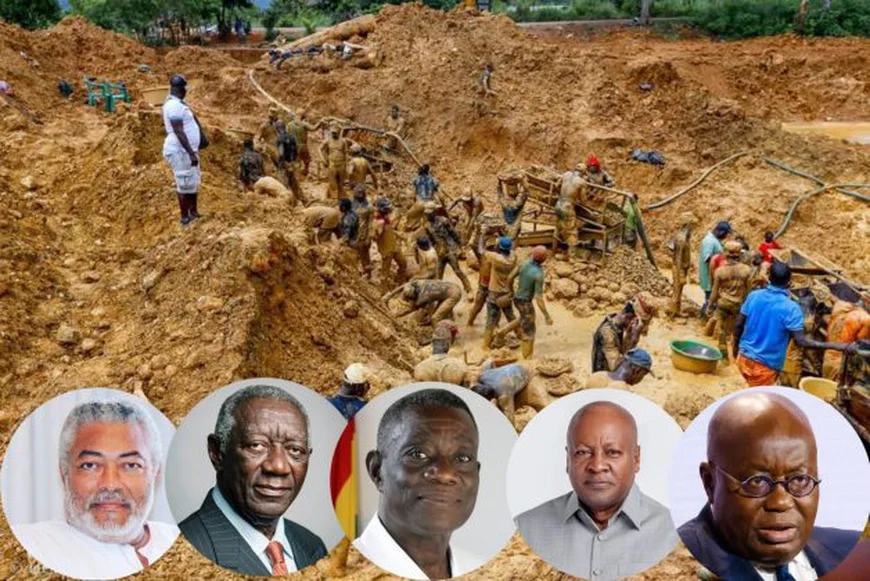
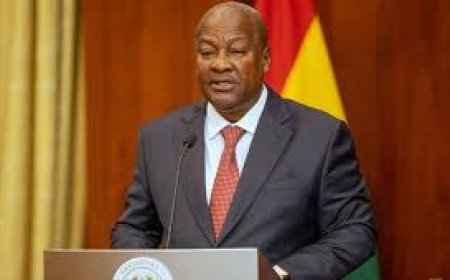
The inability of successive administrations to protect Ghana’s rivers, forests, and land from destruction reveals a hard truth we must confront honestly. This is not the failure of one government or another, but the failure of leadership itself. When different parties govern yet the same crises deepen, it becomes clear that Ghana is trapped in a political system that produces politicians rather than leaders – men and women skilled at winning power, but unprepared or unwilling to defend the foundations of life and nationhood.
When people say, “oh, he’s a politician” or “he’s playing politics,” it almost always carries a negative meaning. If the very word “politician” has become an insult, why do we keep choosing them? Why don’t we insist on a rigorous, merit-based process that produces genuine leaders instead of political actors?
The tragedy is that politics, in many places including Ghana, has drifted far from leadership. A politician today is often seen as someone who manipulates, calculates, deceives, and prioritizes party survival and self-preservation over national survival. “Party hia sika”, to wit “the party needs money”, is no longer a scandal – it has become so normal it is now admired, repeated, and even worn like a badge of honour. That is why the label “politician” feels dirty.
Leadership, by contrast, is built on service, sacrifice, courage, truth, competence, and long-term thinking. These qualities have been displaced by showmanship, patronage, and political theatrics.
We get politicians because we tolerate shallow vetting, personality worship, and short-term electoral drama. Real leadership requires a culture that insists on competence and integrity – and enforces it ruthlessly. Until citizens raise the standards, Ghana will continue to get what it settles for: career politicians instead of nation-builders. Our survival depends on flipping this equation: less politics, more leadership; fewer actors, more architects.
Leadership is everything for any nation
Leadership determines whether a country rises or collapses. Ghana’s 2022 economic meltdown was not fundamentally an economic crisis – it was a leadership crisis. In the same way, Ghana does not have a galamsey crisis; it has a leadership crisis. When leaders fail, every sector fails. When leaders compromise, institutions collapse. When leaders look away, destruction spreads. Our problems are merely symptoms. The real disease is the absence of courageous, competent, disciplined leadership.
And to make matters worse, political competition has descended into something shameful. People now mount party platforms boasting about how much they have donated, claiming such generosity entitles them to national leadership. Leading the country has been trivialised into a prize to be won – a trophy to carry home – rather than a sacred responsibility to serve.
The Great Irony: We Train Everyone Except Our Leaders
It takes many years of intense training to become a doctor, an engineer, a pilot, or any professional whose mistakes could cost lives. Society understands that the cost of error is too high, so it demands discipline, competence, exams, and practice.
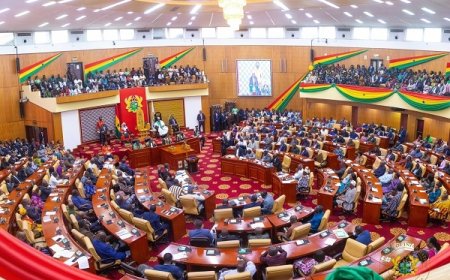
Yet the roles with the greatest impact on life and death – the presidency, parliament, ministerial positions – require virtually no qualification, no structured training, no demonstrated competence, and no long-term apprenticeship.
A president’s decisions can cost far more lives than a surgeon’s errors. A minister’s negligence can cripple health systems, destroy rivers, collapse education, and poison whole generations.
If any profession deserves a long, disciplined, merit-based training pipeline, it is leadership. Leaders should rise through tested responsibilities, proven ability, and practical demonstration – not slogans, tribal calculations, or party loyalty.
A nation that trains its doctors rigorously but hands its destiny to unprepared politicians is not serious about its future.
Examples: Singapore and China Show What a Leadership System Looks Like
Singapore: Lee Kuan Yew and the Culture of Competence
Singapore did not become Singapore by accident. It was built deliberately, with leadership as the cornerstone. Lee Kuan Yew and his generation treated leadership as a national duty, not a personal reward.
Singapore’s political culture became known for a few things:
1. Meritocracy over noise
2. Long-term planning over election gimmicks
3. Results over rhetoric
4. Discipline over popularity
Lee Kuan Yew’s approach was blunt: the country must be run by people who are competent, tested, and serious – because national survival is not a debate club.
Singapore also made public service a high-standard profession. Leadership was not romanticised; it was professionalised. People were promoted based on performance, and incompetence was not celebrated as “loyalty.”
In Singapore, leadership became honourable because the system made it difficult for unserious people to rise – and even more difficult for them to survive.
China: Deng Xiaoping and the Power of a Leadership Pipeline
China’s rise was not built on speeches. It was built on discipline, planning, and ruthless focus on national development.
Deng Xiaoping did not sell China poetry. He sold China outcomes. He famously pushed the mindset that: It doesn’t matter whether the cat is black or white, as long as it catches mice.
Meaning: results matter more than ideology.
Under Deng, China shifted from ideological purity to practical development: building industry, building capacity, lifting millions out of poverty, and thinking in decades – not in campaign cycles.
China’s leadership system, unlike Ghana’s, is structured like a pipeline:
1. People rise through *layers of responsibility
2. They are tested through *local and regional administration
3. They are evaluated based on delivery, competence, and stability
4. Promotion is largely based on performance and internal party processes, not just public popularity contests
China’s system is not perfect – no system is – but it is designed around one principle Ghana desperately needs: leadership is cultivated, not improvised.
In China, you don’t wake up one day, print posters, hire musicians, and declare yourself “ready to lead 35 million people.” You rise through years of responsibility.
Why Ghana’s Best Stay Away From Politics
Because politics in Ghana feels dirty, many of our truly promising leaders refuse to enter it. People with competence, values, and vision avoid a toxic, hostile, morally corrosive environment – and who can blame them?
If Ghana instituted a transparent, rigorous leadership pipeline with real vetting and real accountability, many of these capable individuals would step forward. But in the current system, politics becomes a refuge for the shameless – those with nothing to lose, nothing to protect, and no legacy to build.
And it is this vacuum that produces the governance failures we suffer today.
The Way Forward: Clean the Ecosystem, Elevate the Standards
Ghana does not lack leaders. Ghana lacks a system that produces leaders.
To reverse our decline, we must rebuild the political ecosystem from the ground up:
1. Strict multi-layered vetting of candidates
2. Mandatory leadership training and public-service apprenticeships
3. Transparency in financing and decision-making
4. Accountability mechanisms that actually bite
5. Value-based civic education from childhood
6. A cultural shift that rewards integrity, not theatrics
Until we build a system that nurtures leadership and filters out opportunism, we will keep repelling our best minds while attracting our worst.
The future belongs to nations that make leadership honourable again. Ghana must choose whether it wants to be one of them.
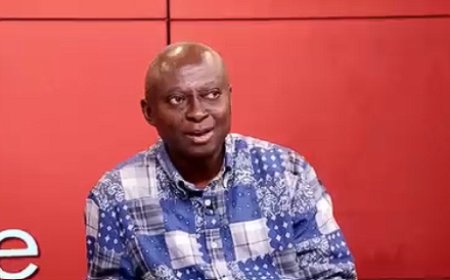
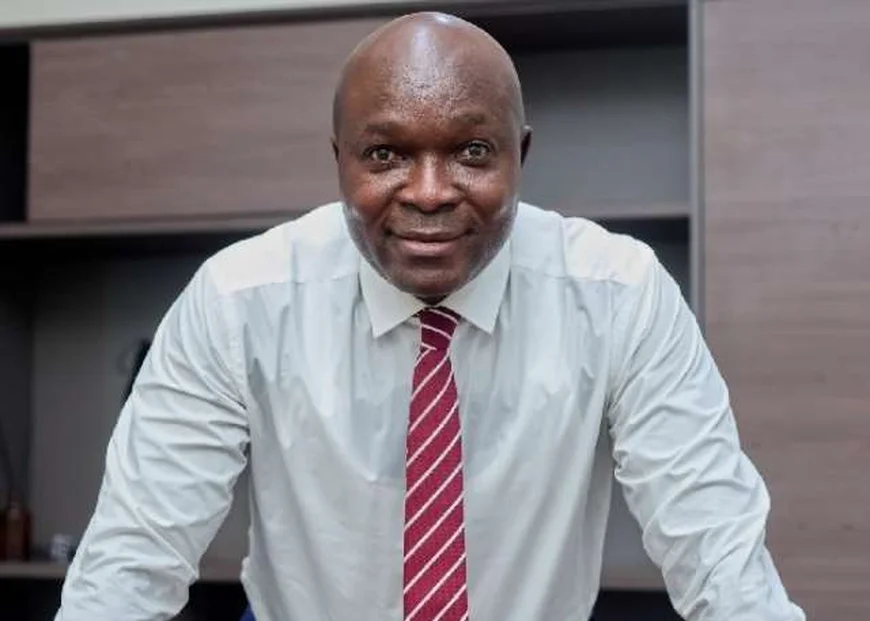
The author, Efo Small, is a Ghanaian in whom Ghana is born
Click the link Puretvonline.com | WhatsApp Channel to join the WhatsApp channel
GOT A STORY?
Contact/WhatsApp: +233243201960 or manuelnkansah33@gmail.com