


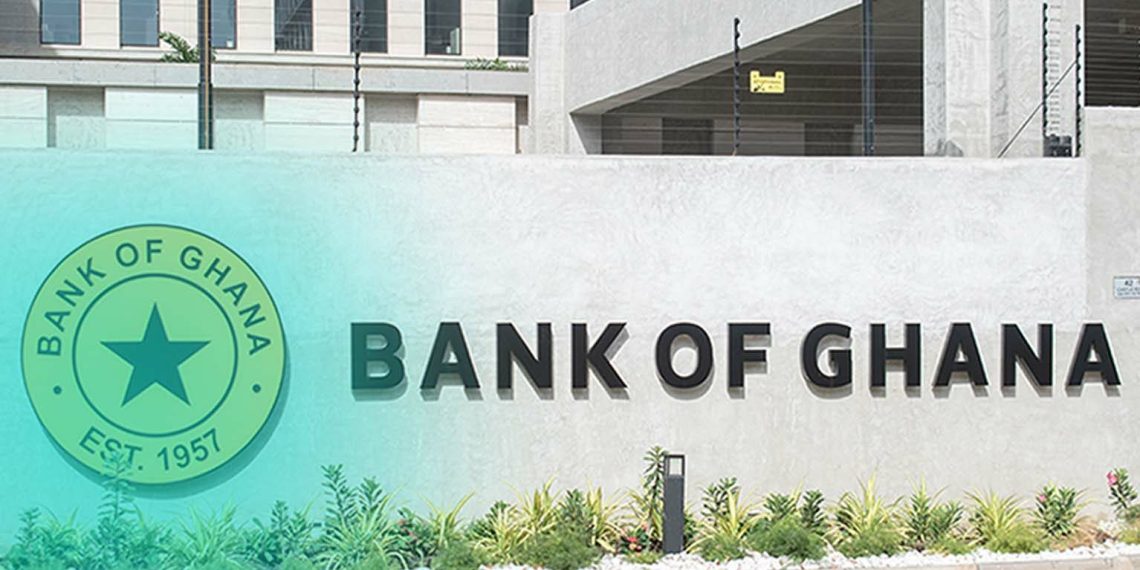
The Bank of Ghana (BoG) says it remains financially capable of executing monetary policy even after posting a GH¢15.63 billion accounting loss for the 2025 financial year.
This impairment, up from GH¢9.49 billion in 2024, has also pushed the bank’s total negative equity to GH¢93.82 billion.
However, the Board maintains that the institution is still policy solvent, insisting that the losses which have come at a significant financial cost are largely as a result of the measures stabilising the economy.
What this simply means is that the bank can continue to fund its core monetary operations without direct government support.
“Taking into account the medium-term macroeconomic outlook – inflation stabilisation, the transition to a lower interest rate regime, projected moderation in OMO costs, and a structurally stronger income base, the Board is of the opinion that the Bank of Ghana will remain policy solvent over the medium to long term,” the Bank’s 2025 audited financial statement read in parts.
The bank recorded GH¢22.23 billion in operating income, leaving a surplus of GH¢5.50 billion after accounting for sterilisation costs, well above the GH¢793.5 million surplus posted in the previous years.
However, the central bank doubled its spending on open market operations to GH¢16.73 billion in 2025.
These operations used to mop up excess liquidity required the issuance of high-interest instruments to commercial banks to tame inflation and support the Cedi.
But easing inflation should gradually reduce these costs, as the economy moves closer to its 6% to 10% target band.
Which is why the Bank is projecting a return to profitability between 2026 and 2030 as interest rates decline and monetary policy begins to ease.
However, it warns that risks such as persistent inflation, exchange rate volatility and possible delays in government recapitalisation pose a major threat.
The financial statement shows that the Domestic Gold Purchase Programme generated a GH¢9.57 billion net gain in 2025.
Through the initiative, the bank accumulated 2.9 million ounces of gold, which helped to strengthen reserves and stabilise the foreign exchange market without placing additional pressure on the cedi.
This strategy has become a critical buffer for the bank, particularly in the aftermath of the domestic debt restructuring.
Currently, the Bank of Ghana and the Ministry of Finance have agreed on a phased recapitalisation plan spanning 2026 to 2032 to address its negative equity position.
What this agreement seeks to do is see the government inject capital into the bank through cash or financial instruments to restore positive equity over time.
In addition, the Bank of Ghana (Amendment) Act, 2025 (Act 1158) has increased the bank’s minimum capital requirement from GH¢10 million to GH¢1 billion.
Per the statement, external auditors KPMG issued an unqualified opinion on the accounts but flagged investment impairments as a key audit concern.
The Bank currently holds GH¢116.42 billion in investments, with GH¢17.26 billion set aside for potential credit losses.
The auditors also highlighted deviations from International Financial Reporting Standards in the treatment of gold and foreign exchange gains, though these are permitted under local legislation.
Click the link Puretvonline.com | WhatsApp Channel to join the WhatsApp channel
GOT A STORY?
Contact/WhatsApp: +233243201960 or manuelnkansah33@gmail.com
