


The Bank of Ghana (BoG) says its monetary policy decisions will continue to be guided by data, even amid global commodity price fluctuations, as it works to stabilise the cedi, restore macroeconomic confidence, and strengthen Ghana’s external buffers.
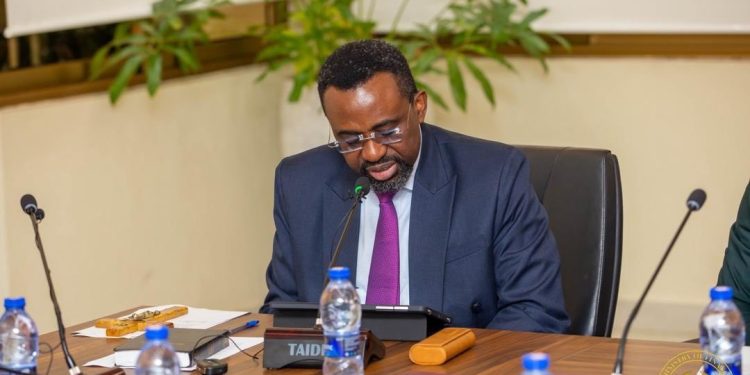
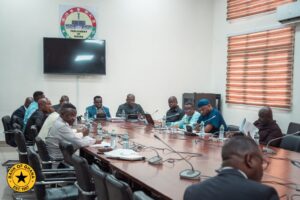
Governor Dr Johnson Pandit Asiama made the remarks on Monday while briefing the Parliamentary Committee on Economy and Development at the Parliament House on the bank’s 2025 Monetary Policy Report.
“I appreciate the continued engagement of Parliament on issues of monetary policy, financial stability, and the broader health of the Ghanaian economy. The Bank of Ghana will therefore continue to pursue a prudent, disciplined, and data-driven approach to monetary policy,” Dr Asiama told MPs.
Dr Asiama explained that when he assumed office in February 2025, “the Ghanaian economy was emerging from one of the most challenging periods in recent history. The country had experienced a sovereign debt restructuring, sharp currency depreciation, and a surge in inflation. Although stabilisation efforts were already underway, the starting conditions remained fragile.”
Headline inflation ended 2024 at 23.8 per cent, well above the bank’s target of 8 ± 2 per cent, while the Ghanaian cedi had depreciated 24.8 per cent over the year.
To restore stability, the bank implemented a series of coordinated policy measures, including maintaining a tight monetary policy stance, addressing excess liquidity, and strengthening external buffers and the foreign exchange framework, among others.
Dr Asiama highlighted the results, noting that “Headline inflation fell from 23.8 per cent in December 2024 to 5.4 per cent by December 2025 and further to 3.3 per cent in February 2026, one of the lowest readings recorded in recent history.”
He added that the Ghanaian Cedi had appreciated significantly, reflecting improved fundamentals, while the monetary policy rate was reduced by 900 basis points to 18 per cent, easing borrowing conditions. Gross international reserves increased to US$13.8 billion, providing about 5.7 months of import cover.
“For ordinary Ghanaians, the real measure of success is simple: prices are stabilising, the cedi is steadier, and the economy is moving back toward normal,” he said.
The governor also reported strong banking sector developments. “Capital adequacy improved to 17.5 per cent; asset quality has also improved, and banks now have a clear roadmap to reduce NPLs toward 10 per cent by end-2026,” he said, adding that liquidity remains robust with total assets rising from GH₵368 billion to GH₵447 billion and deposits increasing from GH₵276 billion to GH₵325 billion.
“Taken together, these indicators show that the banking system today is liquid, solvent, and profitable and increasingly positioned to support Ghana’s economic recovery,” Dr Asiama noted.
Acknowledging external risks, the governor cautioned: “We remain mindful of risks in the global environment, including shifts in financial conditions and commodity price volatility. The Bank of Ghana will therefore continue to pursue a prudent, disciplined, and data-driven approach to monetary policy.”
Hon. Dr Eric Afful, Chairman of the Committee and MP for Amenfi West, praised the bank’s openness. “The Committee is satisfied with the Governor’s frank discussions and urges continued engagement with Parliament to curb misinformation and disinformation,” he said.
Click the link Puretvonline.com | WhatsApp Channel to join the WhatsApp channel
GOT A STORY?
Contact/WhatsApp: +233243201960 or manuelnkansah33@gmail.com
